• Skip to primary navigation
  • Skip to main content
  • Skip to primary sidebar
  • Home
  • About I Wander
  • Privacy Policy

I Wander

Travel, Itineraries & Guides, Hotel Reviews

  • Asia
    • Bhutan
    • Brunei
    • Cambodia
    • Indonesia
    • Japan
    • Korea North
    • Korea South
    • Malaysia
    • Philippines
    • Singapore
    • Taiwan
    • Thailand
    • Uzbekistan
    • Vietnam
  • Europe
    • Austria
    • Croatia
    • Czech Republic
    • Germany
    • Georgia
    • Poland
    • Spain
    • Ukraine
  • Aviation
    • List of Flight & Lounge Reviews
  • Hotels
    • List of Hotel Reviews
  • Food
  • Travel Tips

Bino

Welcoming the Tiger Year

February 14, 2010 by Bino 2 Comments

Chinese New Year is again upon us! The long weekend that accompanies this holiday in Singapore is usually marked by family reunions and hearty feasts. Make no mistake about it. This is probably the time of the year when Singaporeans are at their most hospitable state. Tradition goes that people (even strangers) can’t be repelled for a home-cooked new year’s dinner, which occurs throughout the week. Sweet.
The city is generally quiet during this time of the year as almost all shops are closed. A smattering of events are usually done to coincide with the new year’s celebrations, including the “River Hongbao” cultural exposition.

the entranceThis year's event is notably lackluster and tacky, considering I was there last year and the lighting installations then were much more impressive. Still, it's a free event. And if you've got nothing to do during this long holiday, might as well check it out. There are performances held daily at around 8pm in the evening.the god of fortune

year of the tiger

another dragon

pandas on a swing - possibly the lamest display of them all

wishing area

The lighting installation can be found at The Float @ Marina Bay, just behind Esplanade. It runs until the 20th of Feb (open til 11pm).

Filed Under: Singapore Tagged With: chinese new year, river hongbao, Singapore

Burmese Days Pt 3 – From Scenic Pindaya to Placid Inle Lake

January 26, 2010 by Bino 4 Comments

The third and final leg of our trip took us to the highlands of Shan State, which is not very far from China, Laos and Thailand. Again, we boarded a short morning flight – this time to Heho. By this time, the faces we saw inside the airport were beginning to look very familiar. Many others were taking the same route that we did. The authorities seemed to be stricter this time around – and we were asked for our passports despite it being a domestic flight.

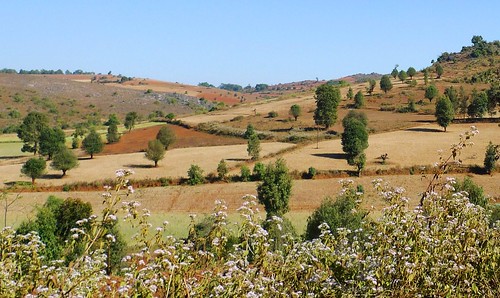
not the typical southeast asian landscape

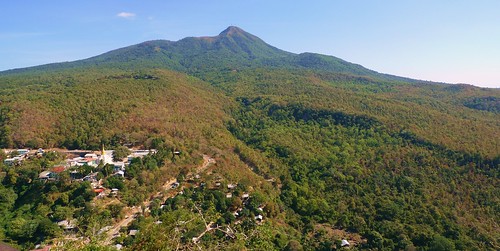
Heho, and the surrounding areas, seemed like a different region altogether. The landscape, consisting of fields sunkissed in yellow, brown and red, seemed inconsistent with what I would typically associate with Southeast Asia. This, along with numbingly cold temperatures, made it hard for me to imagine that I was only a few dozen miles away from the punishing tropical jungles of Burma and Thailand.

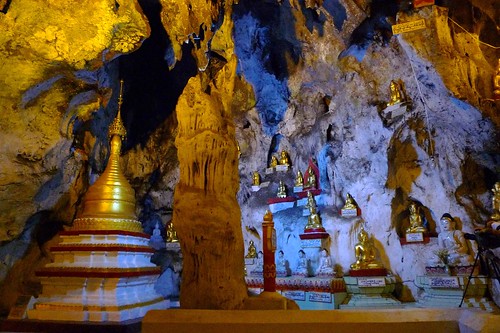
inside pindaya cave

The main highlight for this third leg was Inle Lake, but we made a detour and went the other way to see Pindaya Cave. West of Heho, the cave was a labyrinth filled with thousands of Buddha images. Some parts were pitch black, and I wouldn’t be surprised if some paths actually led to a secret passageway.

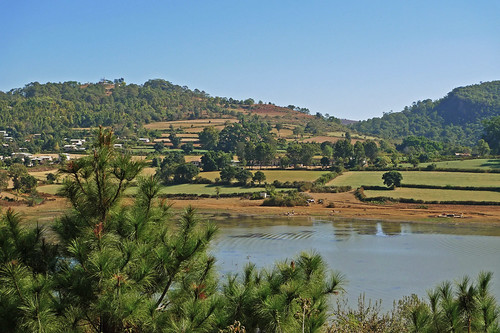
From Pindaya there was also a great view of the lake and surrounding plains below. As I said earlier, it really was not the typical Southeast Asian landscape.

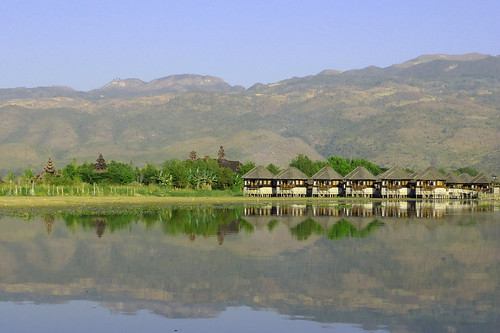
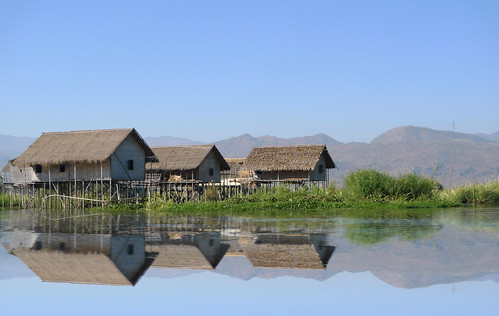
almost perfect reflection

inle lake

From Pindaya, it was another 2 hours drive to Inle Lake. We passed by several oxcarts and trucks cramped with people hanging onto the handles. It reminded me a bit of East Timor although the weather this time was certainly much more pleasant. We arrived in Nyaungshwe, the traditional departure point to reach the lake, in late afternoon. A $3 zone fee was collected from each of us upon entry. Our boatman was already there waiting for us at the dock- our “programme” was certainly well-arranged. Our driver left us there, promising to show up two days later to take us back to the airport.

temples on the lake

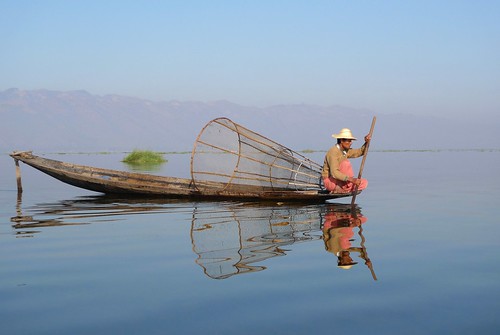
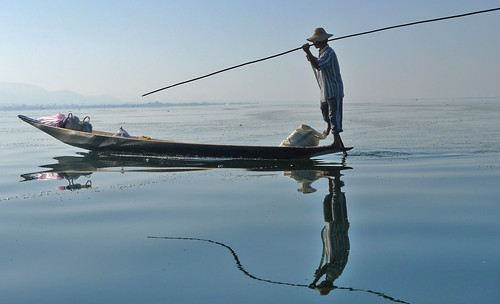
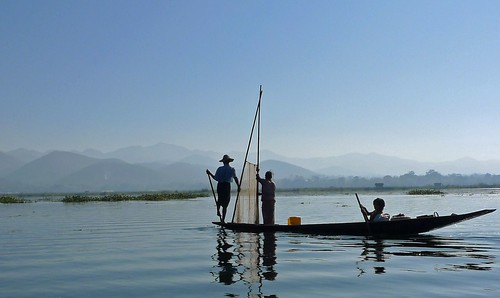
Having seen similar places before, I wasn’t all too impressed by the lake per se. The formation was a bit similar to some of the lakes in the Philippines, and many other places in Southeast Asia could offer similar views. What was more interesting about those 2 days in the lake however, was our ability to observe how the locals manage to preserve their traditional way of life. Though a lot of them have managed to find a living around the tourism industry, most of the people still work in the agricultural sector.

looking out for the morning catch

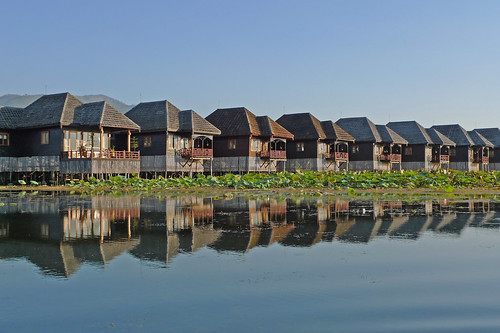
We stayed at the Myanmar Treasure Resort, one of the newer accommodation options in the Inle Lake area. Like all other “resorts” in the lake, our room consisted of a cabin on stilts – well, sort of. For about US$80 a night, we got a very spacious room that included a living area which could very well sleep up to 5.

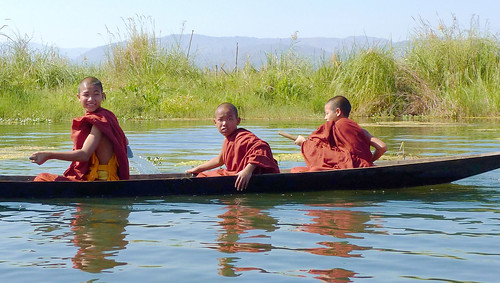
monks

There are several interesting villages surrounding the lake, with each famous for a certain thing such as silverware, weaving, soy-based products, etc. The highlights are Indein, and Ywama. Most boatmen will take tourists to see some of these shops, where the quality is commendable. The good thing is that there is absolutely no pressure to buy – even when there’s no option for the customer to just walk out (because it’s on a lake).

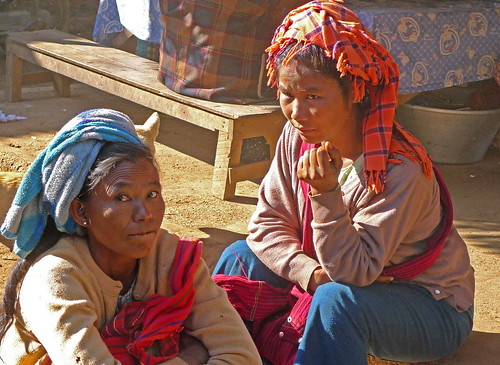
village women

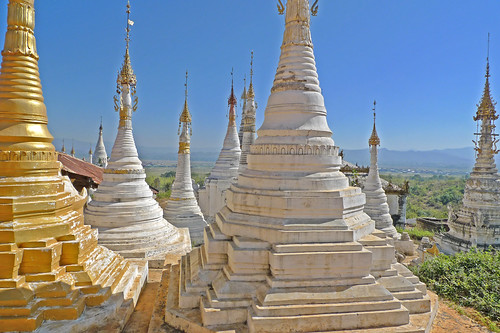
thaung tho kyaung stupas

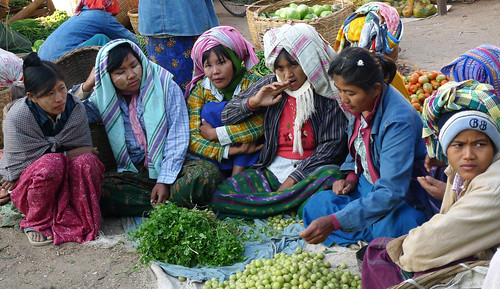
Those who happen to be there during the weekend can actually catch the market gathering activities which the tribes people do during Saturdays and Sundays. On display are arrays of jewelry, knick-knacks, vegetables, spices and whatnot. It’s a good place to take interesting photos of locals who wear curiously draped headgears.

Tip: It can get extremely cold in the mornings. During the two days that we were there, temperatures reached near freezing (4 degrees celsius) in the morning. Accommodations there don’t have any heaters so warm clothing is essential!

Filed Under: Burma Tagged With: Burma, inle, lake, myanmar, photography, pindaya, tips, travel

Burmese Days Pt. 2 – We’ve Only Just Bagan!

January 13, 2010 by Bino 13 Comments

We left Rangoon for an early morning flight to Nyaung-U, the gateway to the ancient city of Bagan. Having been to both Angkor in Cambodia and Borobudur in Indonesia, I wanted to see with my own eyes how this much-raved about archeological zone compared with the other two.

ladies catching up on the morning gossip

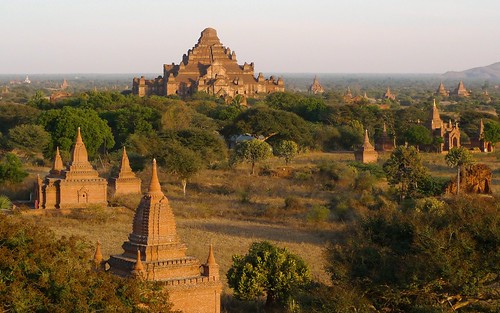
Our flight from Rangoon departed very early in the morning. For the journey, we were brought to the domestic airport which in all honesty, looked like a dilapidating monstrosity. As I had requested to avoid government-run joints, the travel agency arranged for me to take Yangon Airways, a small outfit consisting of just 2 planes. Conditions were better than I expected, and we were actually served snacks during the flight. I was fortunate enough to get a window seat. As we were landing in Nyaung-U, the pilot was quick enough to point out the swathes of temples scattered beneath us. We were finally in Bagan!

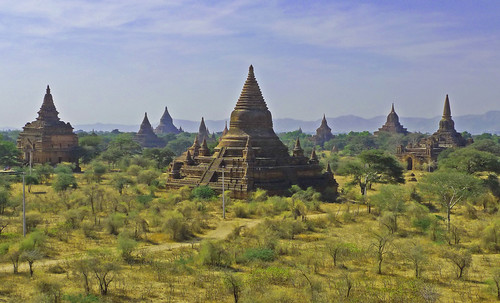
bagan!

I had arranged for a car to take us around the different temples in the huge archeological zone. Many of these were haphazardly restored by local authorities without supervision from UNESCO so it was left out from the World Heritage List. Otherwise, I believe Bagan rightfully deserves the title.

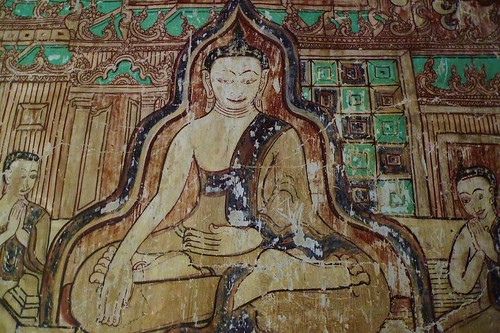
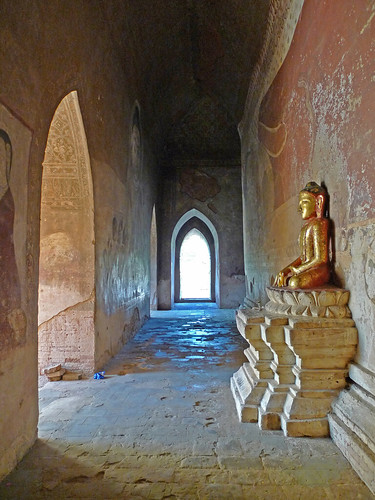
one can find buddhist frescoes inside some of the old stupas

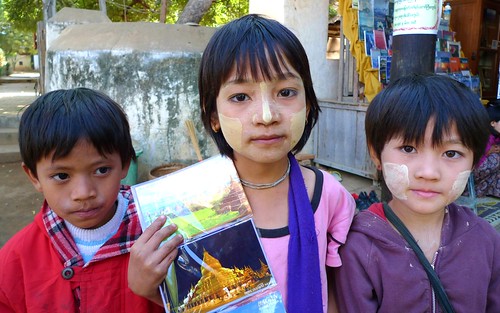
postcard sellers in bagan

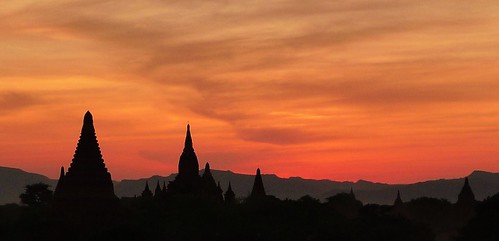
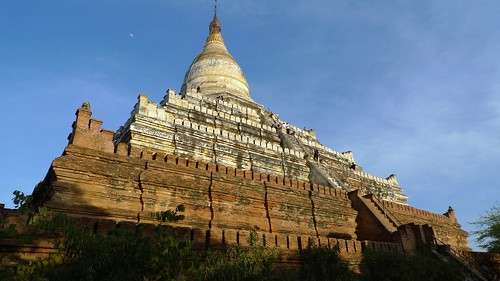
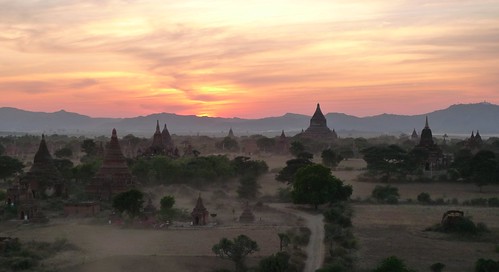
We spent two days exploring many of the main temples as well some of the minor ones in Bagan, as recommended by my trusty guidebook. Midway in the journey, I realized that it would be unfair to compare Bagan with Angkor or Borobudur as they are all different from each other. For Bagan, the highlight would definitely be the scenery. Many of the large temples are open for climbing, and the view from the top is definitely breathtaking especially during sunrise and sunset. The silhouette of the pagodas in the distance contrasted against the yellow sun is definitely a highlight of any trip to Burma.

this ain’t no painting

shwesandaw paya – offers a good sunset view so come here before the crowds do!

Like Angkor and Borobudur, souvenir vendors were standing by at every major temple. Although not as pushy as their Cambodian or Indonesian counterparts, the vendors in Burma would actually strike conversations with tourists (with the intention of making a sale of course) and follow them inside. This proved to be an annoyance, although the locals just take it all in good humor.

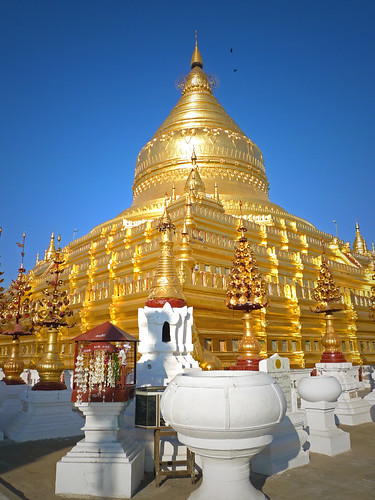
shwezigon paya

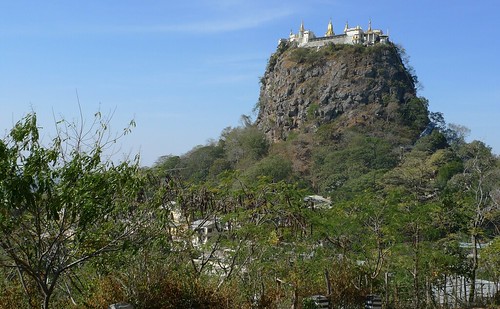
The next day, we ventured into Mt. Popa – an extinct volcanic crater with a temple at the peak. Considered to be the  center for the 37 nats (spirits), the climb to the top consisted of 700+ steps amid Macaque monkeys competing for space with humans. The 25 minute climb was by no means easy but the view from the top was certainly spectacular. In the afternoon, we went back to Bagan and I rented a bike for an hour just to try it out. For the rest of the afternoon, we visited more temples. My personal favorite’s Sulamani Pahto, with its impressive frescoes inside depicting the Buddha.

mount popa — the “extinct” crater

the actual mount popa

in sulamani pahto

a good view

We ended our second day in Bagan watching the sunset again, this time from a different viewpoint. The colors were again magnificent, and the crowd of photographers seemed even bigger this time. I came to realize that spending my Christmas holiday here was a very good decision after all.

what can i say? the sunsets here are really something else!

Recommended Top 5 temples in Bagan:

  1. Sulamani Pahto
  2. Ananda Pahto
  3. Upali Thein
  4. Manuha Paya
  5. Dhammayangyi Pahto

Filed Under: Burma Tagged With: asia, bagan, Burma, myanmar, photography, Southeast Asia, travel

Burmese Days Pt. 1 – Introduction to Yangon

January 11, 2010 by Bino 2 Comments

“This is Burma, and it will be quite unlike any land you know about…”

-Rudyard Kipling

The second largest country in Southeast Asia, Burma (Myanmar) is not a place where people normally spend their Christmas and New Year holidays (that is, unless you’re Burmese). Many people have no idea about the majestic sights found in this isolated country, despite its proximity to Singapore or to my home country. Because of Burma’s relative isolation and calls for tourism boycotts, the country only gets about 500,000 tourists a year – a trickle compared to neighboring Thailand. This time, I was again bombarded with questions by friends on why I was going and whether there was “anything noteworthy to see there.”

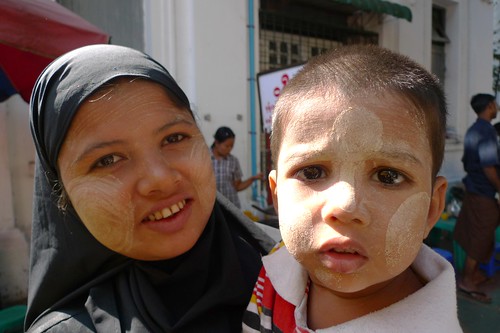
mother and child – on the streets of rangoon

As Burma was in my Top 3 countries to visit, I decided to finally push through with this trip last month. I had arranged with a travel agency based in Burma for domestic plane tickets and accommodations as it was cheaper that way. After months of going back and forth on plane schedules and suitable places to stay, we finally landed in Rangoon (Yangon) on a misty morning during Christmas Day. The first thing I noticed as we exited the airport was how most men wore skirts. Burma has been relatively isolated since it gained independence from Britain in 1948 so the people still maintain their traditions. The skirt is called longyi and it’s actually a versatile form of dress worn by both men and women. The second thing I noticed was how green Rangoon was compared to many other Southeast Asian cities. The roads are tree-lined, and there are many parks dotted around the city. In Downtown Rangoon, the streets are also laid out on a grid so it’s easier to find your way around.

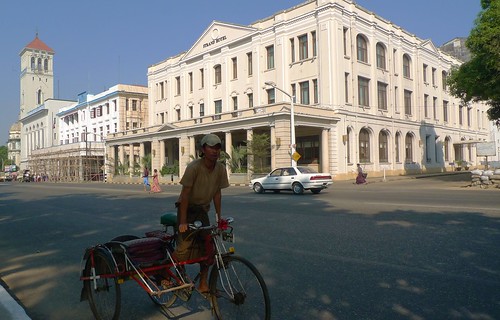
strand hotel – the poshest in burma (myanmar)

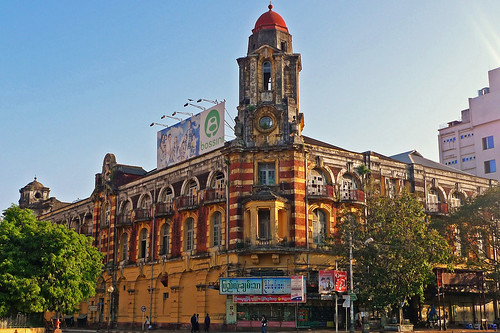
a trip to rangoon is like a trip back in time – many colonial buildings remain intact such as this one

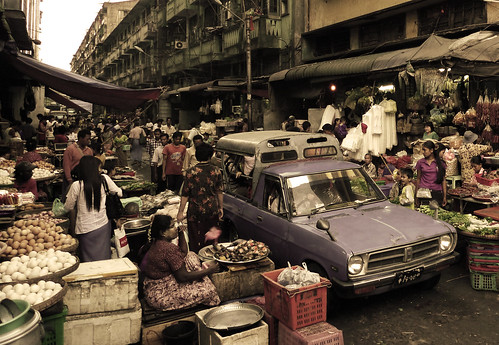
Although home to about 5 million people, Rangoon itself does not feel like a big city. The pace is quite relaxed and there’s not a lot of cars on the roads. Neon lights are a rarity here.   The trade embargoes are very much evident with the lack of international brand names – for some reason though, Bossini is very popular in Rangoon. Most cars are disheveled and are literally falling apart. The taxis consist of outdated models such as Isuzu Gemini and Toyota Corolla from the late 70’s to the early 80’s. Needless to say, there’s no airconditioning.  It’s practically a miracle how they manage to run these contraptions after several decades of use.

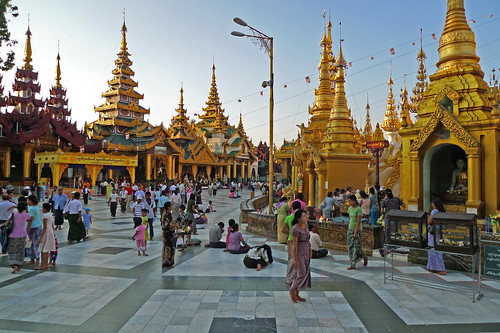
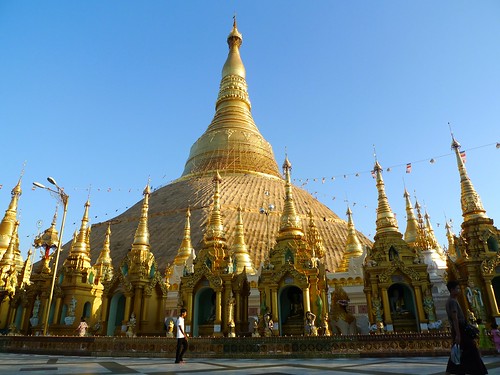
shwedagon paya is considered to be one of the most sacred sites in burma

That day happened to be Christmas Day so most shops were closed. We started the day by having a walking tour of downtown Rangoon, which still has a lot of buildings dating from British colonial rule. This include the Strand Hotel, which is Rangoon’s version of Singapore’s Raffles Hotel or Manila’s eponymous hotel. In the afternoon, we visited the Chaukhtatgyi Paya with its famous reclining buddha as well as the main attraction – the Shwedagon Paya. It was truly an amazing sight, and I was at awe with the gold-encrusted main pagoda that stood out even from a distance. The place was packed with tourists and locals alike, and it was a great way to just people-watch. It was a hodgepodge of human activity. In one corner there would be people praying and bowing their heads to the Buddha while in another, a group of German tourists would be taking snapshots of the fine architecture. Shwedagon was a relatively big complex so we spent some time circling it – there were several other altars and mini-temples with dozens of Buddhist images. There were a couple of notable banyan trees near the edges that were supposedly transplanted from the place in India where Buddha gained enlightenment. Gold was the prominent color and it was evident in almost every structure that made up the massive complex.

the majestic shwedagon paya

We had dinner at this Chinese restaurant owned by a Singaporean. The owner told us how he ended up starting a business in Burma – because it was extremely competitive in Singapore and it was difficult to make money there. What he said was true in a sense – this is why most Singaporeans end up in the corporate world rather than set up their own businesses. Those who do set up their own gig find themselves facing head-to-head competition, especially in the food and beverage industry. But I digress. Moving back to Rangoon.

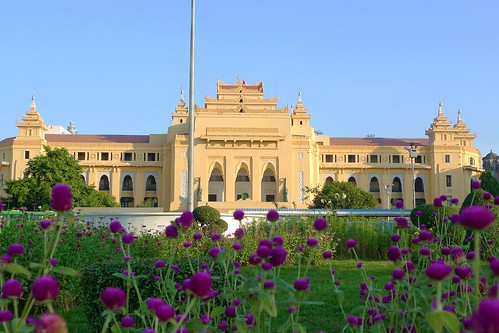
rangoon city hall – with a fresh coat of paint!

The next day was spent walking around Downtown Yangon. We started at the Strand Hotel, a fine colonial building that’s reminiscent of Singapore’s Raffles Hotel. We walked towards Sule Paya, an attractive Buddhist pagoda right smack at a roundabout. This walking tour ended at Bogyoke Aung San Market, where all sorts of handicrafts and Burmese souvenirs were sold. There wasn’t anything we particularly liked, although shops selling rubies, diamonds and other precious and semi-precious stones were in abundance. We also found this market to be a good place to change Kyats (Burma’s local currency).

rangoon during rush hour

We had nothing to do that afternoon so we decided to visit the Gems Museum. Among the things they had for display was a sapphire measuring several hundred carats, rubies, emeralds, diamonds and all sorts of treasures that attested to Burma’s wealth in natural resources. Interestingly, the display was also a sad reminder of how a country can at once be rich and extremely poor.

Looking back, the 2 days we spent in Rangoon was excessive. One full day should have been enough, and the extra day could have been better spent elsewhere in the country. But it was a great introduction to Burma nonetheless.

How to get there: Most popular method is to go through Bangkok where Thai Airways and Air Asia have direct flights to Yangon. An alternative is to go through Singapore where Jetstar Asia and Silkair fly to Yangon.

Best time to visit: December and January are supposed to be the most pleasant months to visit Burma. In Yangon however, we found the heat to be unbearable from noon up until 4pm. Temperatures vary considerably within the day. Normal morning temperatures in December average at a cool 16 to 18 degrees celsius, while afternoon temperatures reach 32 to 35 degrees celsius.

Filed Under: Burma Tagged With: asia, buddha, buddhist, Burma, myanmar, photography, rangoon, religion, shwedagon, travel, yangon

The Forgotten West

December 16, 2009 by Bino 6 Comments

Western Singapore is usually regarded as a drab and unappealing side of the country which travelers can very well do without. As a hub for heavy industry as well as near- identical high-rise government housing, the left side of the island lacks the quaint, colonial charm which the center or Katong in the east offer. If it were not for the heavily publicized Jurong Bird Park, few visitors would take the extra effort of going there. Admittedly, this area is also one of my least visited in the island.

Recently, the government announced a revitalization plan that aims to turn Jurong into an alternative commercial center to Raffles Place.  Plans include a number of office buildings, condominiums, hotels and of course – shopping centers. While these are several years away, visitors to Singapore should be aware that the west has a lot of hidden gems to offer even now. The good thing about these places is that you will often find yourself as the only non-resident visitor. Many of these places are not in tourist maps, so pay close attention.

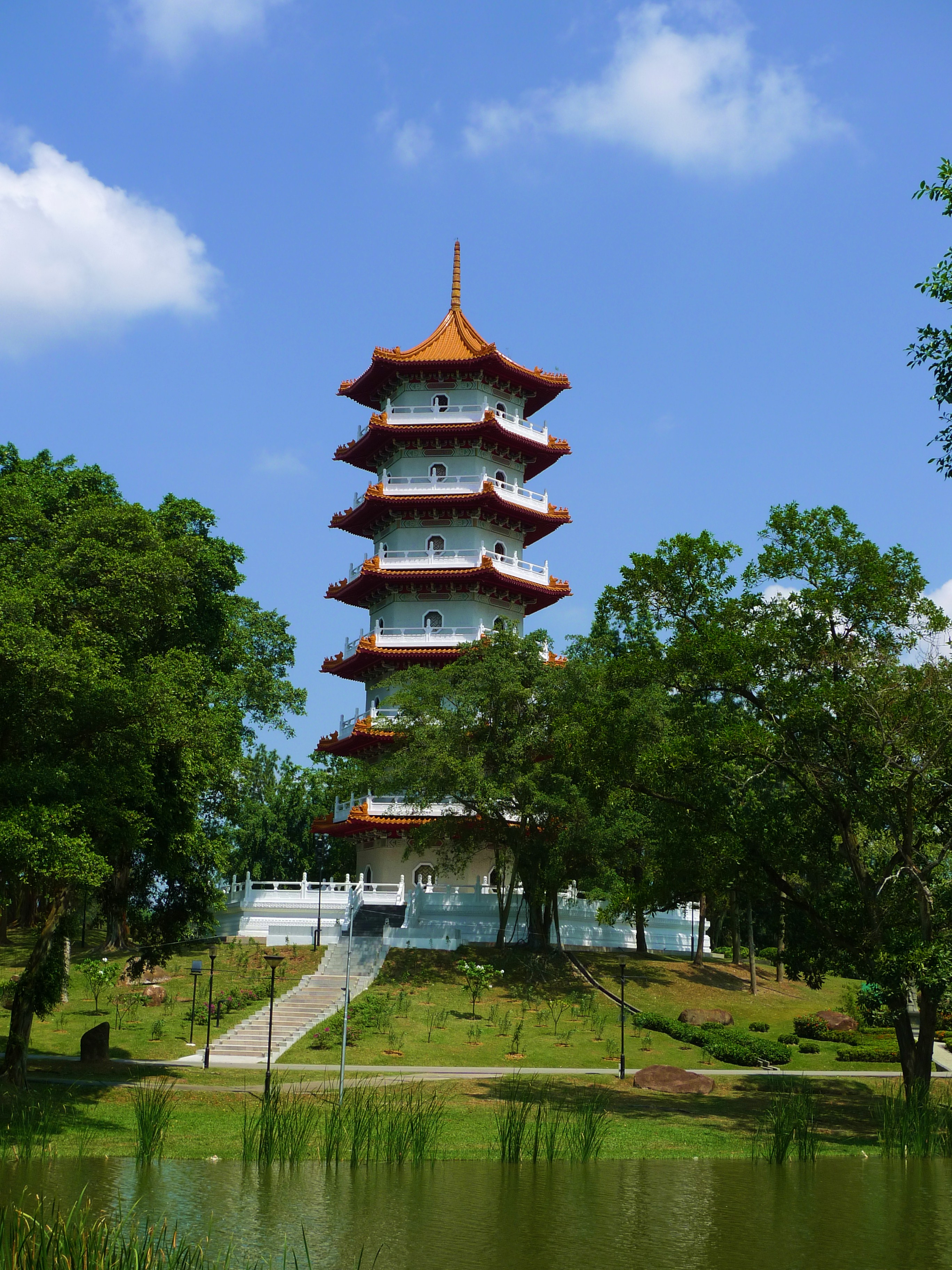
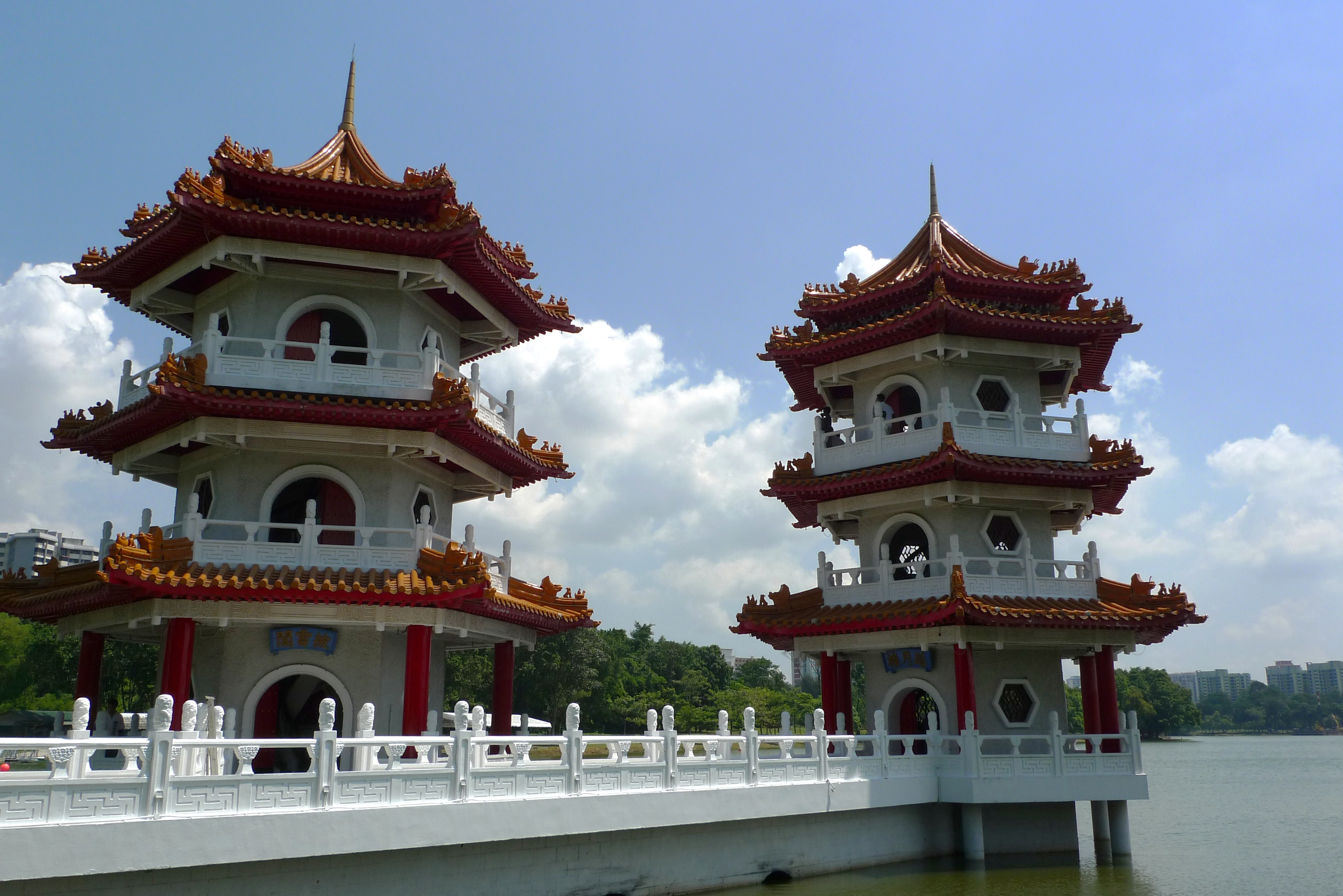
pagoda

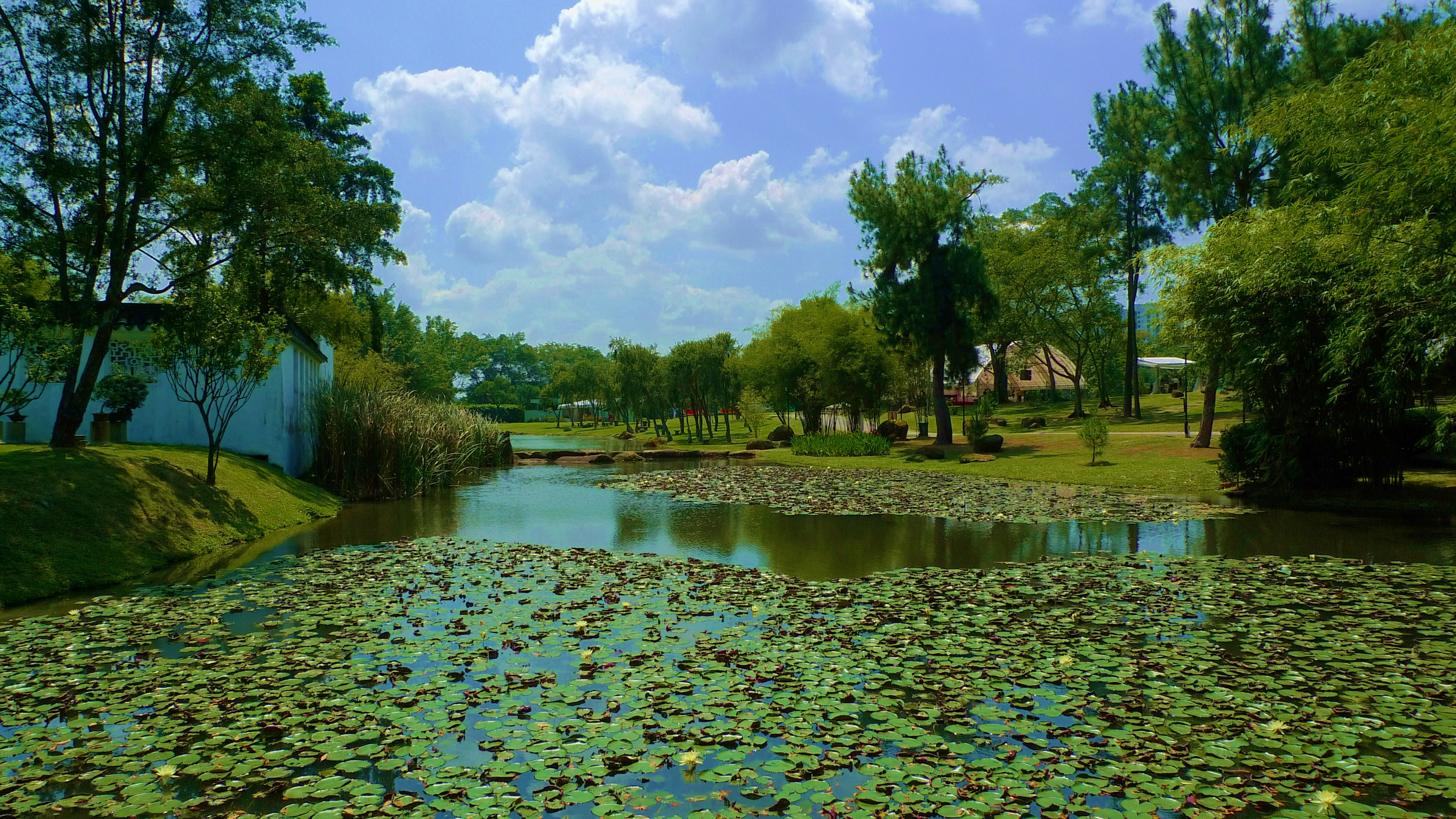
The Chinese Gardens is perhaps the most well-known attraction in Western Singapore after Jurong Bird Park. Yet, only locals take the time to visit the well-landscaped greenery right next to an artificial lake.

lotus pond

inside the pagoda

more pagodas

tropical interpretation of a japanese garden

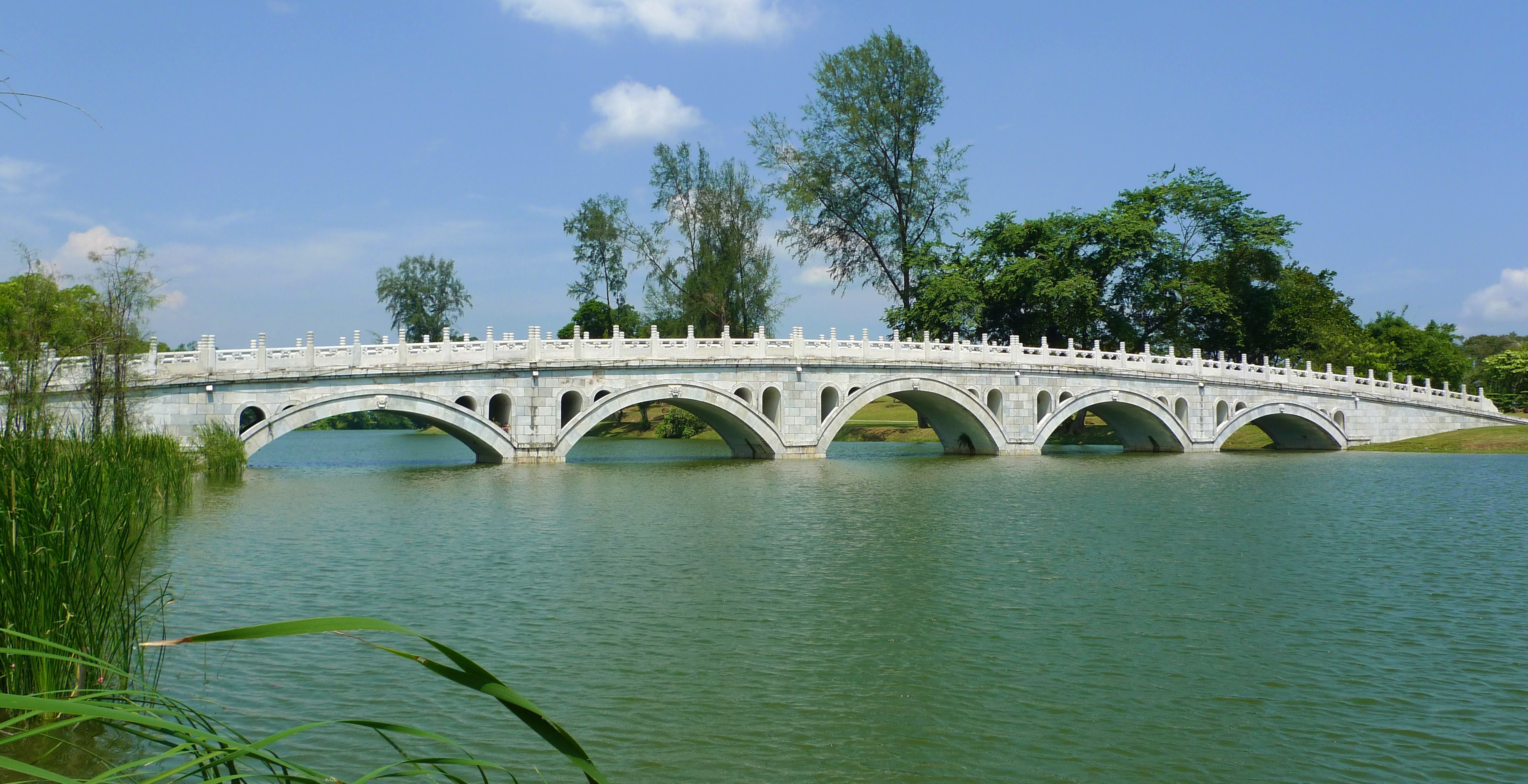
chinese bridge

chinese gate

Admission to the gardens is free, except for a few paid sections such as a turtle museum. There is also a Japanese Garden inside, containing a tropical interpretation of zen.

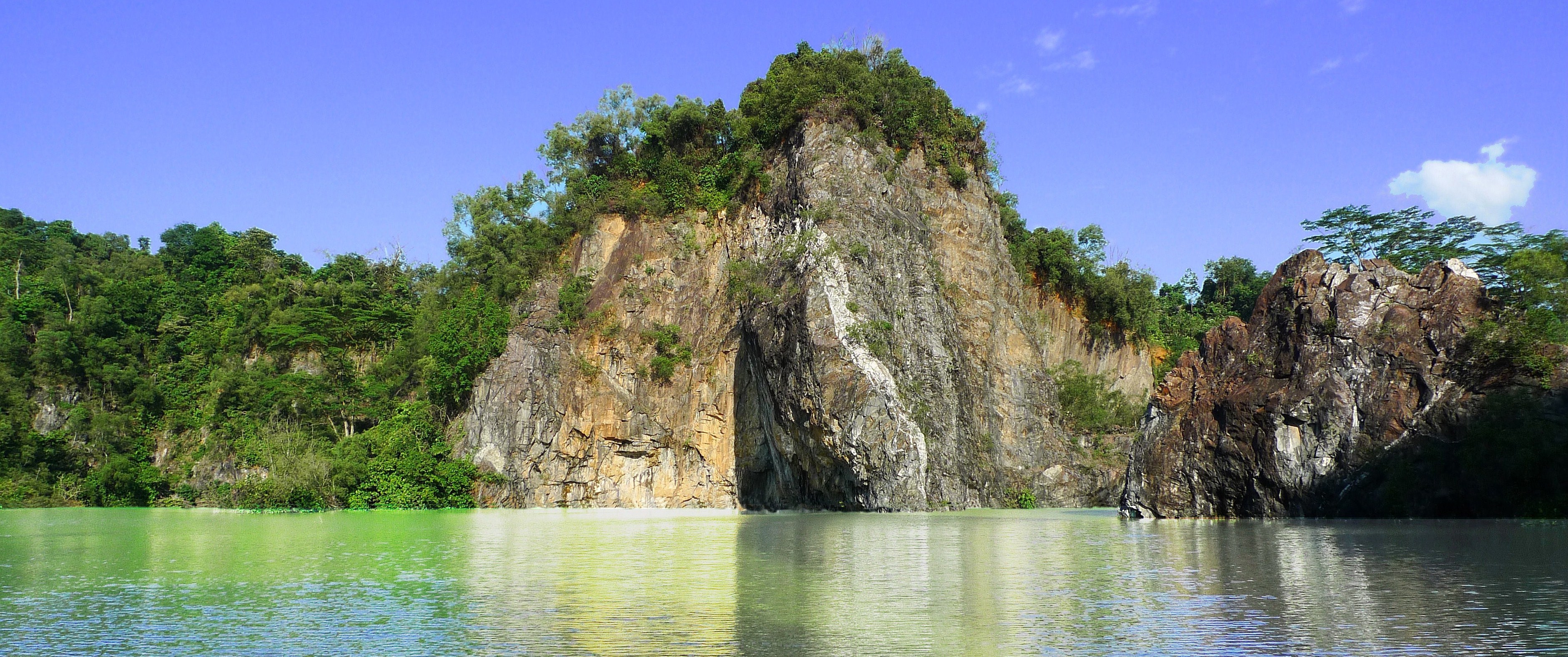
Only a short drive from Chinese Garden is Bukit Batok Town Park. It looks like any other Singaporean park, except for this huge piece of granite rock formation that doesn’t look out of place in Guilin or Halong Bay.

huge piece of granite

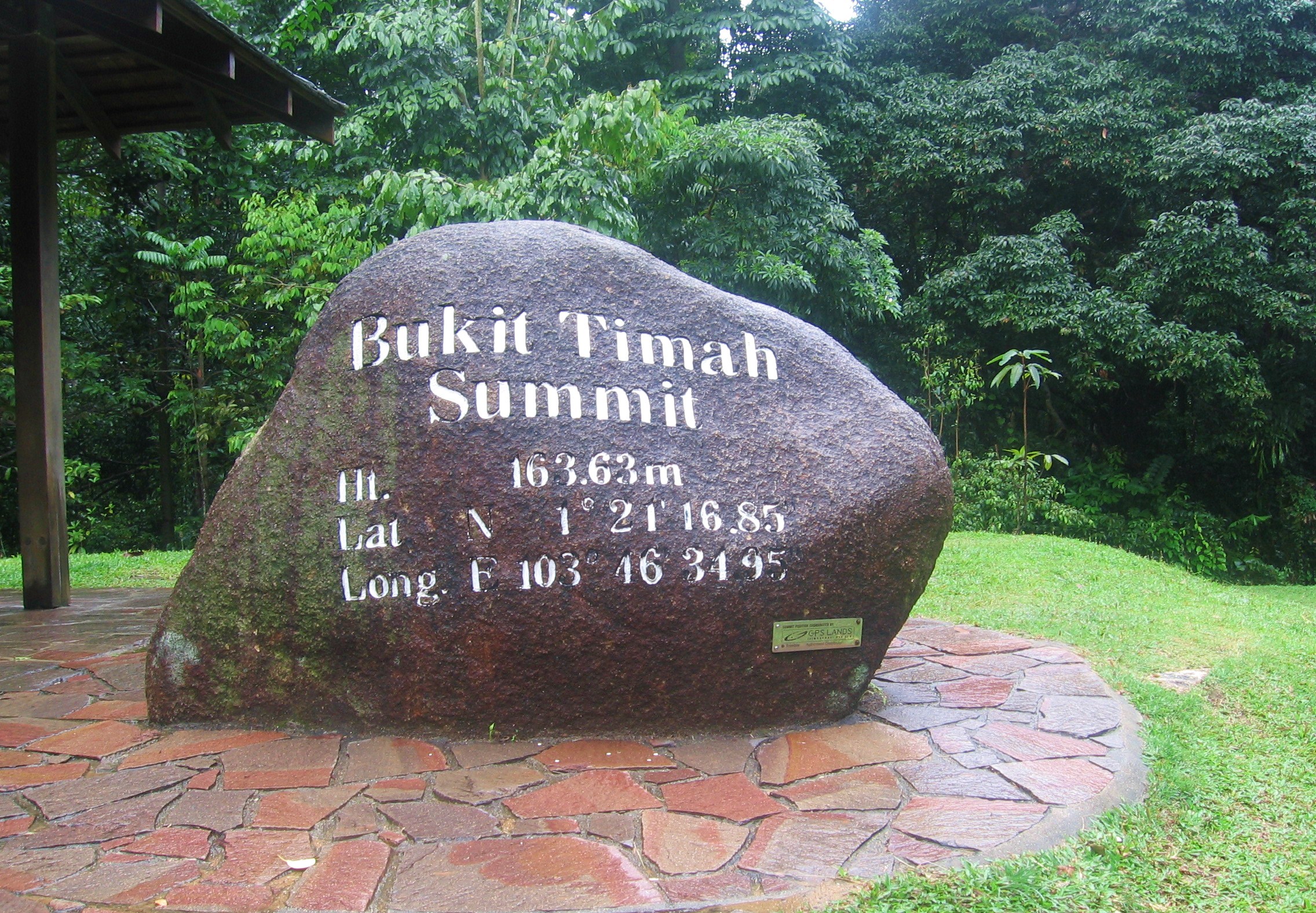
From here, Singapore’s tallest is a stone’s throw away. The monkey-filled Bukit Timah Nature Reserve reaches as high as 163.6 meters., easy and highly manageable by mountain-climbing standards. At least climbers can get to brag that they’ve scaled a country’s tallest peak, even if it’s a small nation like Singapore.

The tallest peak in the country - at a manageable 163.63 meters

How to get there: Chinese Gardens and Bukit Batok Town Park are straightforward destinations and can be reached via the Chinese Garden MRT and Bukit Gombak MRT stations respectively. Bukit Timah is a bit tricky. Taxi drivers should know the place, but for those on the cheap – buses 67,75,170 and 184 go there.

Filed Under: Singapore Tagged With: Bukit Timah, Chinese, Jurong, Singapore

Rock Steady

December 13, 2009 by Bino 2 Comments

One of my favorite spots in Singapore has got to be Punggol Beach, which is situated at the northeastern end of the island just a few meters away from Malaysia. It’s one of the last remaining places in Singapore that still has a semblance of wilderness that is more authentic than the well-maintained nature reserves scattered around the country. I have been to Punggol Beach around 3 times now. Each time I go, I see a new paved road or construction that may very well force this small parcel of land to conform to the efficiency and orderliness which the rest of the island adheres to. Huge swathes of swampland and  grass fields have been replaced with concrete, and new housing flats are starting to dot the immediate landscape.

Thankfully, the beach itself is still there. Compared to other beaches in the country, the one in Punggol is not as crowded. Common visitors include fishermen, young parents trying to gather shells with their children and the occasional photographer. During weekdays, it’s even possible to have huge sections all to yourself. What makes this place so picturesque, especially at low tide, are the big rocks resting by the coast. These complement the surrounding waters very well. The only drawback from the place is that the industrial zone right across in Malaysia, are all too visible.

punggol is usually regarded as a boring new town that's simply a duplicate of the rest of residential singapore. this is true to an extent - but a large part of it is still undeveloped

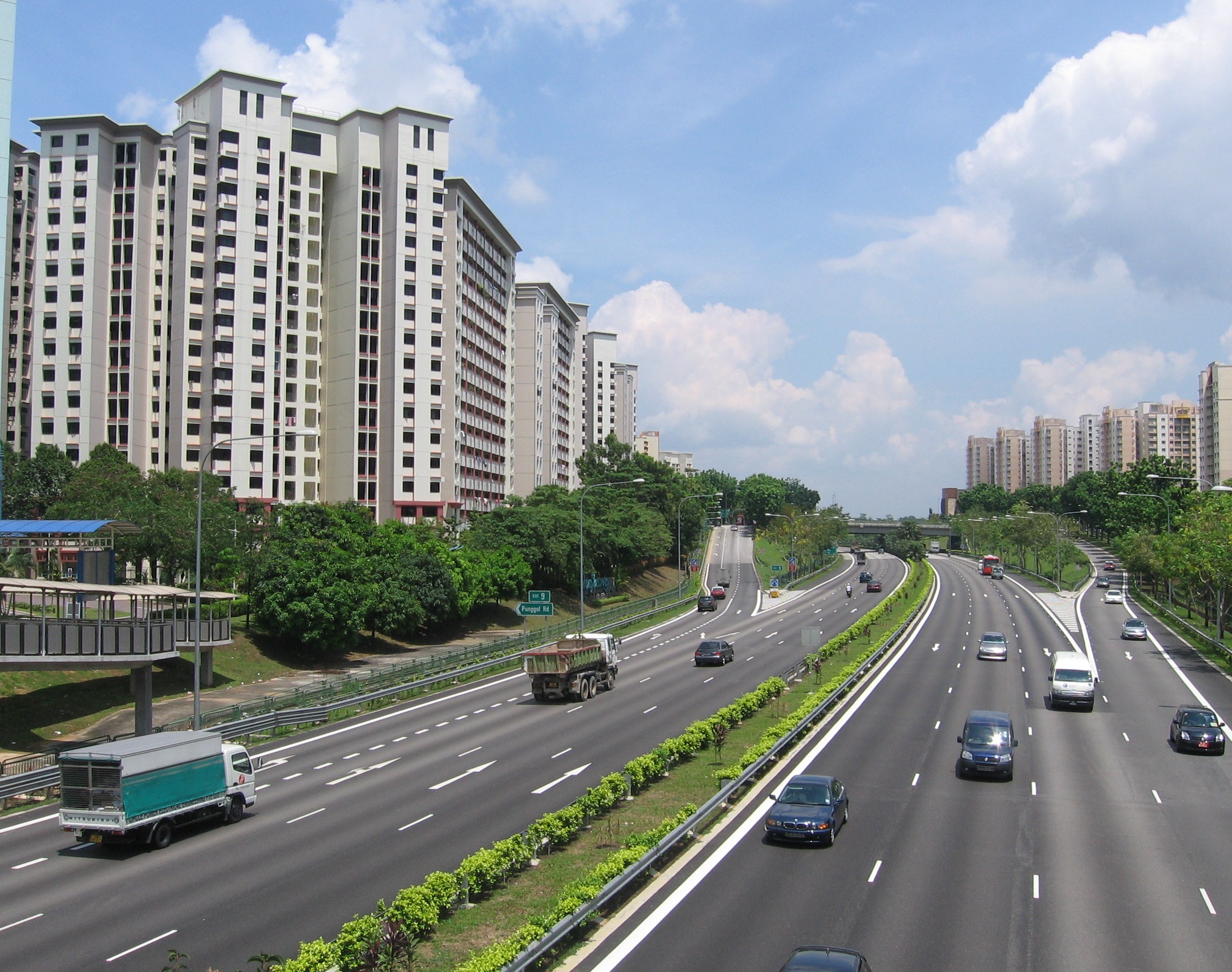
The interesting portion of Punggol is near the end of the island. Otherwise, the rest of the town looks just like any other in Singapore – high rises, condominiums, government housing and the ubiquitous shopping center.

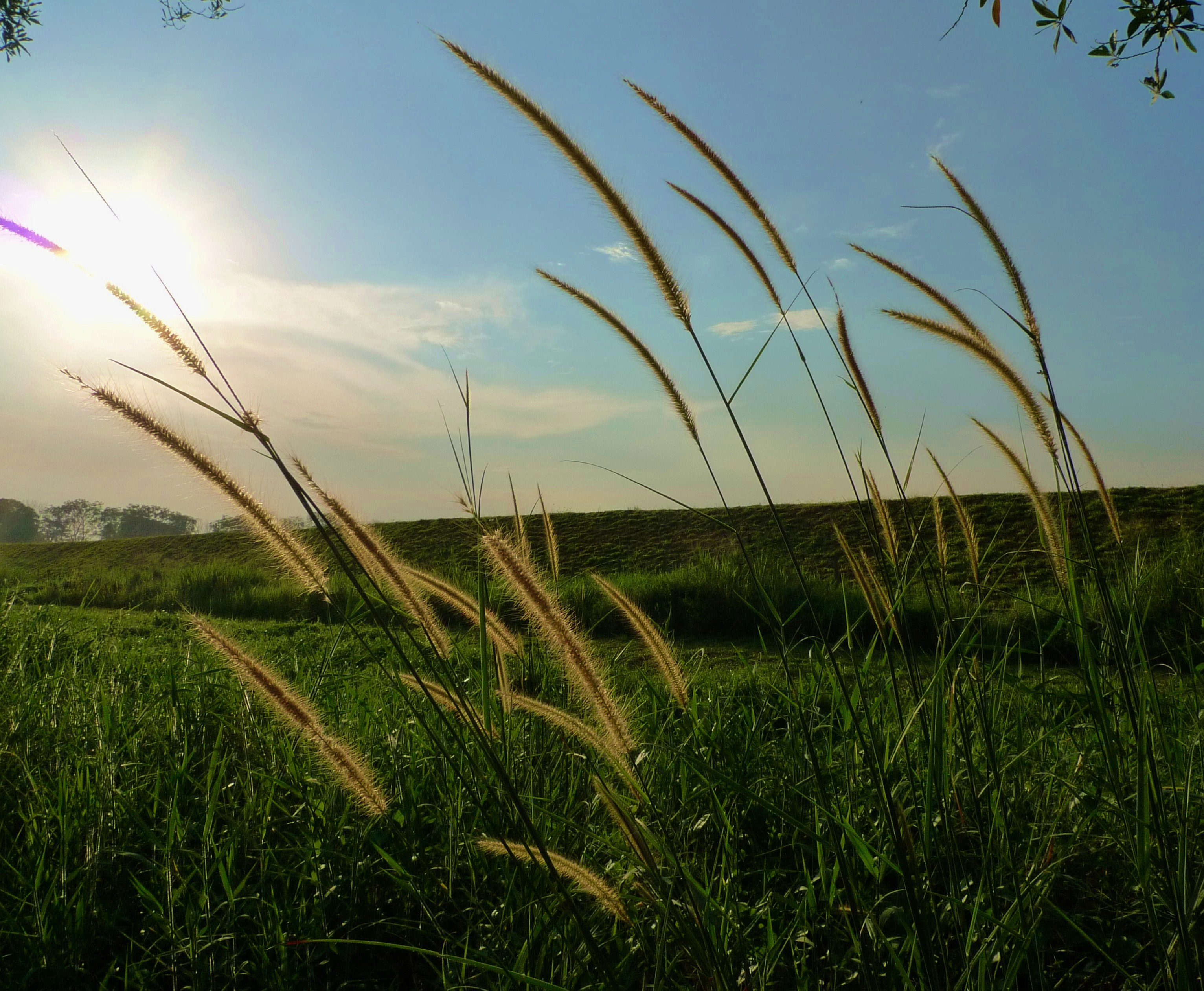
lalang field

Grassy “lalang” fields such as these are being bulldozed and disappearing fast. Land is precious in a small country such as Singapore and these places are prime candidates for the next seaside condominium development.

waves crashing into the rocks

The best time to visit this beach is during low-tide, when the rocks jut out from the sea. It makes for a nice view especially when the waves crash into the rocks, creating a silky water effect.

the waters can sometimes be calm just before it turns to night

The beach has a a beautiful but eerie feel to it, especially just before the sun sets. No surprise, as it’s the site of a gruesome World War 2 massacre which killed hundreds. The place was never fully cleaned up, and some visitors still manage to find bones from those who were killed there.

the lights behind are from malaysia

How to get there: The beach is a bit tricky to find. It’s not advertised in the tourist guidebooks or maps from the tourism board. However, there is a bus that goes there. Your best bet is to take the subway to Hougang station, and transfer to Bus #82 at the bus stop right outside the subway station. Take it all the way to the end. Believe me, you’ll know once you’ve reached the end.

Filed Under: Singapore Tagged With: beach, Punggol, Singapore

Golden Gate Park

November 30, 2009 by Bino Leave a Comment

One of my favorite spots in San Francisco is Golden Gate Park, a mere eight minutes walk from where I used to live. Some guidebooks cite this rectangular piece of land as one of the must-sees in the city, and rightfully so. Unfortunately, its location away from the main tourist areas makes it less frequented by tourists.

While most locals wouldn’t be caught dead near many of the city’s top attractions – for example, walking around Fisherman’s Wharf, visiting Lombard’s “Crooked Street” or riding one of those touristy cable cars are no-nos for San Franciscans; Golden Gate Park today is a living, functioning landmark which is visited by tourists and locals alike. As a 1000 acre park that is 3 miles long, Golden Gate is larger than New York’s Central Park and dare I say, more varied. Aside from the usual trees and park benches that are mainstays of city parks anywhere in the world, Golden Gate houses a music concourse, museums, windmill, botanical greenhouse, beach chalet plus a roaming ground for bison.

Walking from one end of the park to another is possible, although tiring. I ended up walking at least 4 hours in order to see all the main sights. From the western end, I started at the windmill as most people do. A curious sight in San Francisco, it was actually built in 1903 as a functional supplier of water.

windmill at the park

the bisons have been here since 1891

From the windmills moving eastward, the next stop is usually the bison paddock, which contain these grazing animals normally associated to the United States. A number of artificial lakes are also located in this section of the park, including Stow Lake and the man-made island in the middle.

the japanese tea garden

Towards the eastern side of the park is the public Japanese Tea Garden, reputedly the oldest Japanese garden in the United States. The five-acre enclosure is a chargeable area, at $5 a pop.

conservatory of flowers

flower beds

The main highlight of the park is probably the grand, white-colored conservatory. It is the oldest building within the compound. During summer, the main lawn facing the greenhouse is filled with elaborately-designed flowerbeds.

de young museum inside the park

I was fortunate to be in San Francisco when the De Young Museum was opened right after the new building was completed. They offered free admission as well as souvenirs to the visitors during the first week. There is a viewing deck at the topmost floor that has good views of the park’s long expanse.

street performers during museum launch

SF Botanical Gardens

Other activities: biking, rollerblading, rent a boat, play frisbee, enjoy a free concert

How to get there: Take Bus 5 from downtown San Francisco and get off at Fulton Street. The bus goes through the whole length of the park.

Filed Under: USA Tagged With: bison, conservatory, golden gate park, japanese garden, san francisco

Flying Here and There

November 22, 2009 by Bino Leave a Comment

There was a time when I resorted to collecting in-flight magazines of every airline I used just so I can check out their route maps and plan my future trips accordingly. It’s hard to believe but even during the internet age, many airlines initially did not post their route maps on their websites; leaving prospective passengers guessing how to get from Point A to Point B.

Later on, I discovered that Wikipedia had a fairly reliable list of destinations for almost all operating passenger aircraft carriers. While the information was exhaustive, it lacked one crucial element. It still did not state Point A to Point B destinations, the best it could do was provide a list of all destinations served by various carriers.

Then came Openflights, which provides a wealth of information for people who have trips in mind. I can simply type any airport code in the search field (i.e. SIN) and it generates all the direct routes from that airport on the map, complete with distance and flight duration. Alternatively, I can input any airline and it will show all the routes being served. As of now, it does not show flight schedules – but even then, Openflights is a very handy tool for those who want to plan their trips efficiently.

a sample query for London Heathrow Airport which generated over 500+ direct routes

Filed Under: General Travel

Page 111 of 114
« Previous 1 … 109 110 111 112 113 114 Next »

Primary Sidebar

Who Wanders Here?

Hi, I'm Bino, a part-time wanderer and a travel blogger. In this site, I share with you my top travel itineraries. Along the way, I also provide travel guides and tips, recommendations on awesome food to try and impressive hotels to stay! Read More…

Search here

© All rights reserved. All images and text (unless otherwise stated) are owned by IWandered.net. Photos may not be used without permission.

As Seen On:

· Site by Spiff + Sass ·