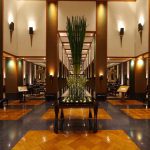
A sense of familiarity engulfed me as I entered Sushi Hare’s new Chijmes location and greeted Chef Angus Chang who stood by the counter. It was almost as if the former Stanley Street interiors were transported there along with the retention of certain design elements like the usage of sun-inspired light installations. I was to discover later on that was partially the case. While the sun-inspired design element takes on a different form now, the 10-seater dining counter was literally moved there along with the furnishings. The restaurant now occupies a cozy space in Chijmes’ ground floor, its zen atmosphere seemingly a world away from the hustle and bustle associated with being at the crossroads of Singapore’s civic district.

While the seating capacity is roughly the same, the new Chijmes space of Sushi Hare is slightly more compact, with a lower ceiling compared to the shophouses typically found along the Stanley Street stretch but the Chijmes outlet was in no way lacking in space. The new location is also arguably more convenient, being near an MRT station that is an interchange and along the major thoroughfares of Bras Basah Road, Victoria Street and North Bridge Road. Parking is also a lot more convenient as Chijmes has basement parking and guests can also choose to park in nearby Raffles City.

I am not sure whether the wait staff were the exact same people but the service level was just as good as I remembered. It seemed like they anticipated my every need without prying. Plates were changed, drinks were replenished, napkins were provided sometimes without me even noticing.

Dinner began with a series of seasonal appetizers that showcased a balance of refreshing flavors and carefully judged seasoning. The Japanese corn and water lily bud paired with fish stock jelly and caviar was a light, elegant opener, with the sweetness of the corn complemented by the savory umami from the dashi-based jelly and the subtle salinity of the caviar – enough to whet the appetite.


The botan shrimp, marinated in uni sauce, offered a delicate sweetness contrasted with the briny flavor of sea urchin. Not letting the sauce go to waste, we were offered a dollop of rice in order to soak the remaining uni sauce in while the surf clam shabu-shabu retained a satisfying bouncy texture that highlighted its freshness.

One of the more memorable appetizers was the tuna noodle, where chopped tuna pieces were presented in noodle-like strands for a playful interpretation of the ingredient. This also carried a bit of the uni sauce we enjoyed earlier underneath.

Equally enjoyable was the deep-fried octopus, which achieved a crisp exterior while remaining tender within, avoiding the chewiness that often accompanies octopus dishes.

The appetizer sequence concluded with an iwashi (sardine) roll, a signature dish at Sushi Hare which I remembered from my previous visit in their old Stanley Street outlet. What made it special was the pickled ginger inserted in the rolls that gave it a bright and zesty profile.


The nigiri progression demonstrated Chef’s attention to both ingredient selection and rice preparation. The squid was scored with precision to create a remarkably tender bite, while the striped jack delivered a clean, delicate flavor that gradually developed in sweetness as it lingered on the palate. The baby sea bream offered a firmer texture, providing subtle variation in the sequence.


Hairy crab or kegani was among the highlights of the evening, showcasing the naturally sweet meat without excessive seasoning. This was followed by tuna cheek, an uncommon cut that possessed a richer, meatier character than the more familiar tuna loin. The scallop was exceptionally sweet and buttery, while the sweet shrimp topped with sea urchin combined two luxurious ingredients whose creamy textures complemented each other beautifully.


The monkfish liver or ankimo was another standout, delivering a rich, velvety mouthfeel often likened to foie gras, yet balanced by careful seasoning that prevented it from becoming overwhelming. This is another mainstay in Sushi Hare’s omakase menu. The ankimo portion was relatively generous, thick and squarish. Blackthroat seaperch, prized in Japan for its naturally high fat content, offered an indulgently rich finish among the nigiri selections, with its delicate flesh almost melting into the sushi rice.

Breaking up the sushi course was a comforting serving of shrimp head rice with smoked mackerel. Rich in umami, it made excellent use of ingredients that are often overlooked, with the aromatic smoked mackerel adding another layer of depth to the rice.

The meal concluded with a negitoro hand roll, where the combination of finely chopped fatty tuna and spring onions wrapped in crisp nori made for a satisfying final savory bite.


Dessert consisted of two parts. The first was the tamagoyaki– fluffy and possessing a chiffon-like texture that would be mistaken for cake. It takes hours for Chef Angus to prepare it and I’ve heard that some customers specifically order one whole portion to take home. We also got a miso soup and seasonal fruits – coincidentally the same combination of muscat grapes and honeydew as per my visit 2 years ago, providing a clean and refreshing end to an omakase that focused on allowing the quality of its seafood to take center stage.
For diners looking for an intimate omakase experience in the city center, Sushi Hare continues to be a worthy destination. Its emphasis is not on theatrics or novelty, but on allowing seasonal ingredients and precise technique to speak for themselves. With its new home at Chijmes, Sushi Hare has become even more accessible while retaining the consistency and understated elegance that earned it a loyal following in the first place.
I had the Ao dinner menu which was priced at S$380. They also have a bespoke Hare menu priced at S$500 and which needs to be reserved in advance. For lunch, they also offer the S$160 Hikari and S$250 Hi menus.
Sushi Hare
30 Victoria Street
#01-23
Singapore 187996
+65 97370113
You May Also Like
 The PERFECT 3-Day Itinerary For Kota Kinabalu (If You’re Not Into Mountain Climbing)
- Hotel Staycation Review: Mandarin Oriental Singapore – One of the Best Hotel Swimming Pools in Singapore
- Hotel Review: The Sukhothai Bangkok – Club Balcony Room
- How to Do Tokyo Comfortably For Just $35 a Day
- Review: SATS Premier Lounge Changi Airport Terminal 1
- Where to Stay in Singapore – The Definitive Area by Area Hotel Guide






Leave a Reply